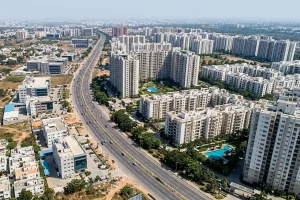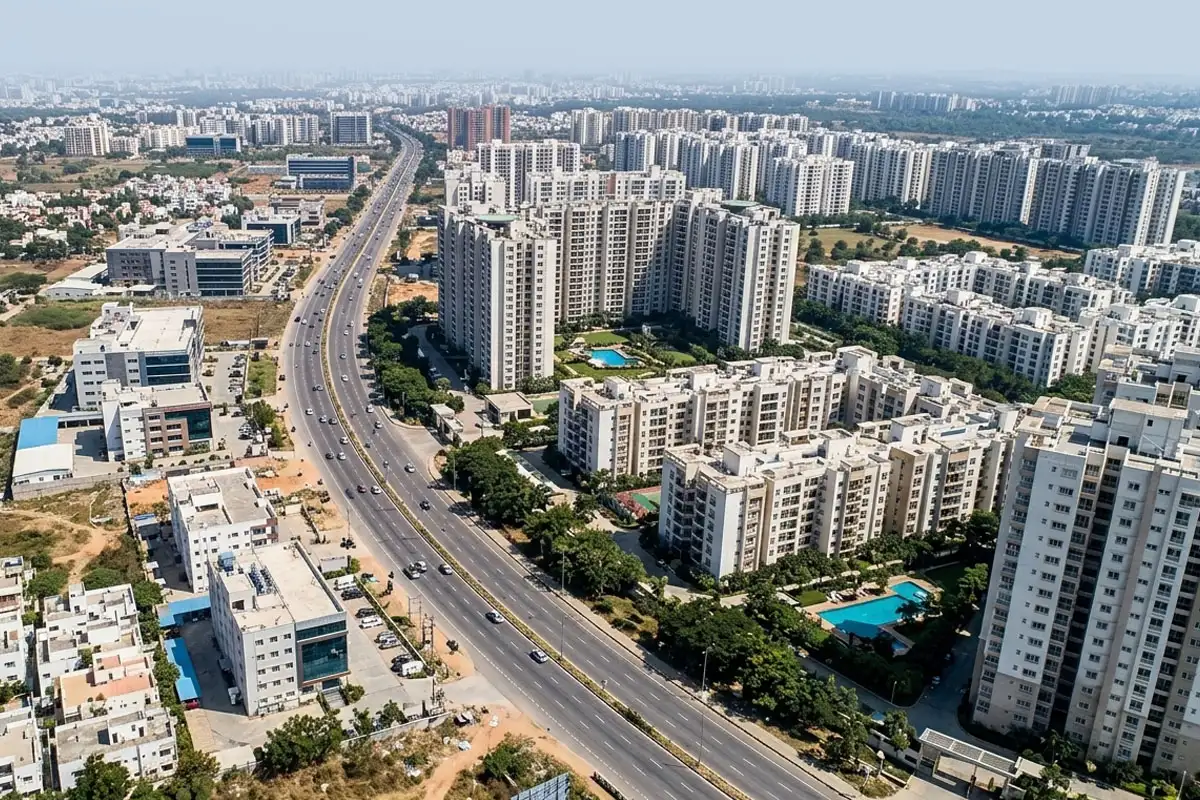
Sarjapur Road is one of Bengaluru’s busiest residential corridors, and homebuyers in 2026 keep asking whether to buy or rent. The decision between “Buying vs renting an apartment” here depends on stay duration, affordability, career mobility, and financial goals. Buying builds equity but locks up capital; renting keeps you flexible without ownership.
Quick Overview
Buying vs renting an apartment: At a glance:
| Factor | Buying | Renting |
|---|---|---|
| Upfront cost | Down payment, stamp duty, registration | Deposit, brokerage, move-in |
| Monthly cost | EMI plus maintenance | Rent plus maintenance |
| Flexibility | Low | High |
| Long-term wealth | Equity and appreciation potential | None; capital stays free |
| Maintenance | Owner | Mostly landlord for repairs |
| Ideal user | Long-term residents | Short-term or mobile residents |
Which Option Is Best by Buyer Profile?
Rent if you move often, buy if you are staying long-term, or rent initially if you need to evaluate your regional permanence.
1. Best Fit for Short-Term Renters
Renting suits for short stays.
- Flexibility to change jobs or cities.
- Lower upfront commitment.
- Easier relocation.
2. Best Fit for Long-Term Buyers
Buying suits for long stays.
- Ownership and stability.
- EMIs build equity.
- Potential appreciation over time.
3. Best Fit for Undecided Movers
Rent first if your long-term location is unclear.
- Test the neighbourhood and commute.
- Keep savings liquid.
- Buy later with confidence.
What Is Driving the Sarjapur Road Market in 2026?
Employment access, infrastructure, and family amenities drive demand. Anarock data reported by Outlook Business shows average prices rose 79% to Rs. 10,800 per sq. ft. between end-2021 and Q2 2025, with rentals up 81%.
1. Connectivity and Commute Pull
The corridor links Outer Ring Road tech parks, Whitefield, and Electronic City, so commute time shapes demand.
- Karnataka’s Cabinet approved Namma Metro Phase 3A (Sarjapur-Hebbal) in December 2024; central approval was pending in early 2026, with completion targeted around 2033.
- Peripheral Ring Road and road widening are underway; ORR-junction congestion persists.
Neighbourhood Profile: Mapping the Sarjapur Road Corridor
| Micro-Market Zone | Regional Character | Urban Environment & Living Experience | Best Suited For |
|---|---|---|---|
| Bellandur Gateway & ORR Junction | High-density commercial hub right next to the major tech parks. | Cramped & Congested: Living here means an incredibly short commute to work, but neighbourhoods suffer from heavy traffic, high concrete density, noise, and little space for expansive green layouts. | Renters or transient professionals who prioritise a 10-minute commute over personal space and lifestyle quality. |
| Kasavanahalli & Haralur Road | Mature, mid-corridor residential pocket that grew rapidly over the last decade. | Established but Packed: Offers a great network of local cafes, schools, and lakes. However, land is tightly restricted, so most residential options are standalone blocks or tightly packed societies with limited open space. | Growing families looking for immediate civic infrastructure who don't mind smaller, high-density community boundaries. |
| Kodathi, Dommasandra & Beyond | Expansive growth corridor featuring vast open land parcels and upcoming Metro connectivity. | Spacious & Forward-Looking: As this zone develops with modern master plans, it allows for sprawling, low-density townships, world-class sports infrastructure, and massive green spaces that are physically impossible to build closer to the city. | Discerning buyers seeking a premium, resort-style lifestyle with fresh air, ample open space, and strong long-term capital appreciation. |
Demand Drivers for Families and Professionals
- Nearby offices and tech parks.
- International schools and hospitals.
- Retail and entertainment.
- Shorter commutes and gated-community lifestyle.
Buying Apartment Costs
Beyond the price, buying apartment costs include upfront charges (such as down payment, stamp duty, registration fees, and loan processing charges), loan interest, and ownership expenses.
1. Down Payment and Registration
Expect a down payment plus statutory charges.
- Down payment: commonly 20% of the price.
- Stamp duty: 2% below Rs. 20 lakh, 3% for Rs. 20-45 lakh, 5% above Rs. 45 lakh, plus cess and surcharge, per HomeFirst.
- Registration: doubled to 2% from 31 August 2025; confirmed on the Kaveri portal.
- Example: on Rs. 1 crore, stamp duty is about Rs. 5 lakh and registration about Rs. 2 lakh.
2. EMI, Interest and Tenure
Loan size, interest rate, and tenure set your EMI; longer tenure lowers it but raises total interest.
Illustration: Rs. 80 lakh at an assumed 8.5% rate of interest.
| Loan Amount | Tenure | EMI | Total interest | Total Amount Payable |
|---|---|---|---|---|
| Rs. 80 Lakh | 15 years | Rs. 78,779 | Rs. 61.8 lakh | Rs. 1,41,80,250 |
| 20 years | Rs. 69,426 | Rs. 86.6 lakh | Rs. 1,66,62,206 | |
| 25 years | Rs. 64,418 | Rs. 1.13 crore | Rs. 1,93,25,450 |
3. Maintenance, Taxes and Interiors
- Monthly society maintenance.
- Annual property tax.
- Interiors and furnishing (one-time).
- Repairs and sinking fund.
- Electricity, water, and utilities.
Renting Apartment Costs
Broad market data sets a clear Sarjapur Road baseline. The overall median monthly rent stands at Rs. 21,000 for 1 BHK, Rs. 41,000 for 2 BHK, and Rs. 65,000 for 3 BHK apartments. These figures reflect long-term historical averages by area.
Recent short-term data reveals a shifting market. While 1 BHK and 3 BHK rates remain flat, 2 BHK rents dropped 17% over the last three months. New leases average Rs. 35,500, giving current tenants excellent negotiating power. While a temporary rent drop may look appealing on paper, it highlights the rental market’s underlying volatility. More importantly, this drop is heavily concentrated in older, standalone apartment buildings that lack modern infrastructure.
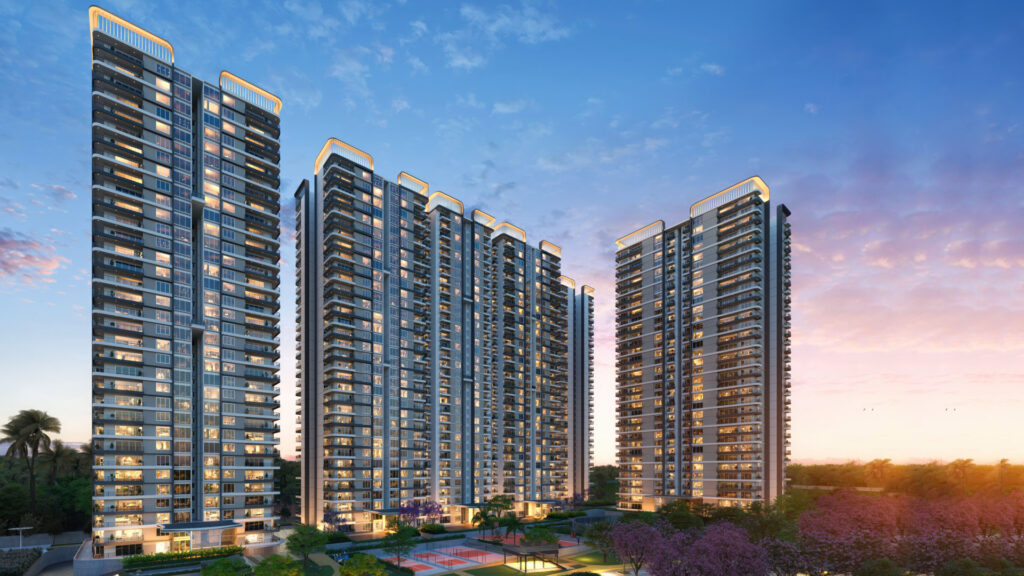
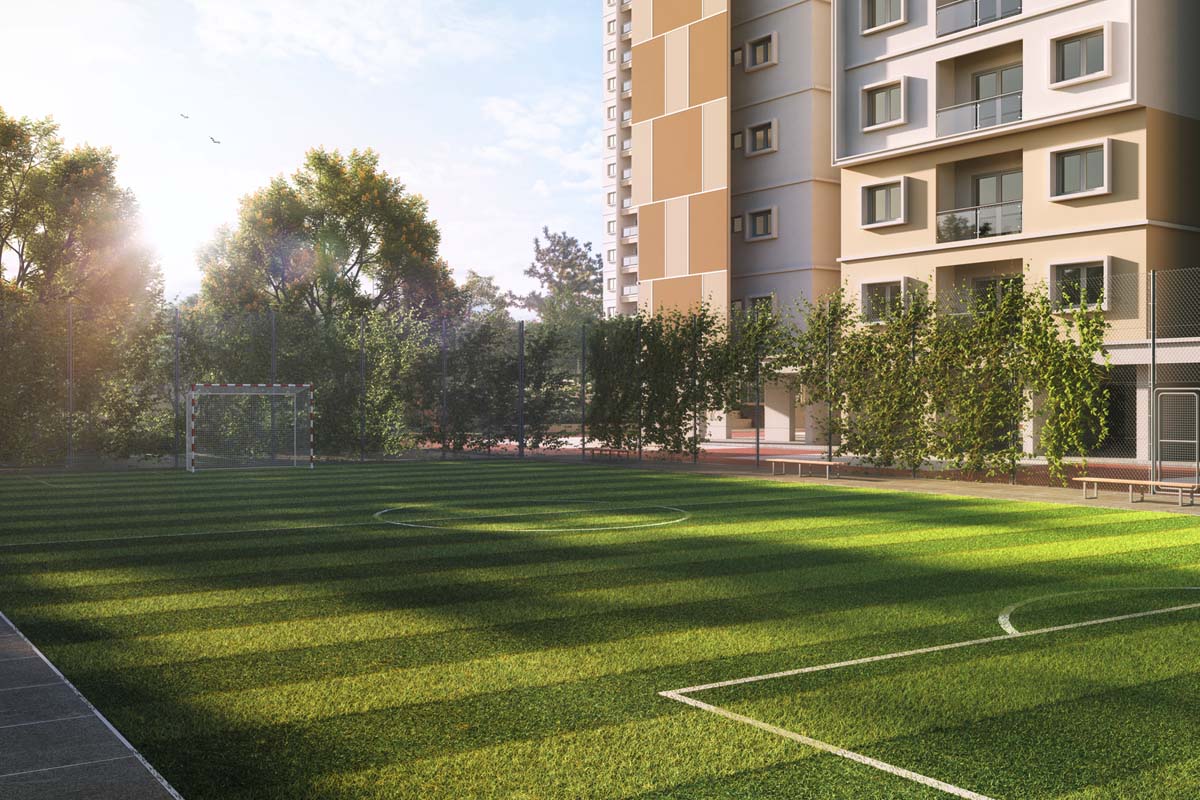
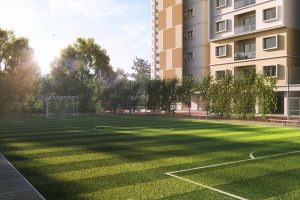
For forward-thinking professionals, 2026 is the ideal time to transition from renting to owning. Premium, master-planned townships like Nambiar District 25 deliver a world-class lifestyle, featuring a 7-acre clubhouse hub, FIFA-sized football fields, and unmatched open spaces that standard rental properties simply cannot match. Investing in a permanent skyrise home shields you from erratic rental graphs while building long-term equity in East Bangalore’s fastest-growing residential arc.
1. Deposit, Monthly Rent and Escalation
- Deposit: typically several months’ rent in Bengaluru.
- Escalation: at an assumed 5% yearly,
- Year 1: Rs. 35,000 (Base rent)
- Year 2: Rs. 36,750 (35,000 × 1.05)
- Year 3: Rs. 38,588 (36,750 × 1.05)
- Year 4: Rs. 40,517 (38,588 × 1.05)
- Year 5: Rs. 42,543 (40,517 × 1.05)
2. One-Time Move-In Costs
- Brokerage fees: Immediate, non-refundable commission paid directly to real estate agents.
- Packers and movers: Professional transit charges incurred to transport your household belongings safely.
- Furnishing capital: High upfront costs for essential furniture and appliances.
3. Recurring Monthly Outlays
- Monthly rent: The base continuous cash outflow required to secure your accommodation.
- Society maintenance: Separate recurring fees collected monthly by the gated community management.
- Utility bills: Consistent monthly expenses for electricity, water, and internet.
4. Renewal and Relocation Overheads
- Lease escalation: Compounding annual rent hikes enforced during every agreement renewal.
- Repeated brokerage: New broker commissions demanded every time you change rental homes.
- Relocation fees: Packing and transit expenses repeated for every single subsequent move.
- Deposit deductions: Landlords automatically deduct for painting and minor repairs.
- Fresh capital lock-up: Large upfront cash reserves needed for your next security deposit.
Buying as an Investment: Can Rental Income Cover Your EMI?
Not everyone who buys in Sarjapur Road plans to live there forever. Many IT professionals in transferable jobs buy an apartment, move for work, and rent the home out. The tenant’s rent then helps service the EMI while the property appreciates. Sarjapur Road suits this approach because demand from nearby tech parks, international schools and hospitals keeps tenant interest steady.
4. How the Rental Offset Works
The idea is simple: the rent you receive is set against the EMI you pay. The table below compares the Rs. 80 lakh loan illustration (8.5% interest) with typical Sarjapur Road rents.
| Tenure | EMI | 2 BHK at Rs. 35,500 (current new-lease average) | 2 BHK at Rs. 41,000 (median) | 3 BHK at Rs. 65,000 (median) |
|---|---|---|---|---|
| 15 years | Rs. 78,779 | 45% covered, Rs. 43,279 gap | 52% covered, Rs. 37,779 gap | 83% covered, Rs. 13,779 gap |
| 20 years | Rs. 69,426 | 51% covered, Rs. 33,926 gap | 59% covered, Rs. 28,426 gap | 94% covered, Rs. 4,426 gap |
| 25 years | Rs. 64,418 | 55% covered, Rs. 28,918 gap | 64% covered, Rs. 23,418 gap | 101% covered, Rs. 582 surplus |
Illustrative only. Rent is shown before maintenance, vacancy and tax.
2. What the Numbers Show
- A 2 BHK covers roughly half to two-thirds of the EMI. Depending on tenure and rent, you would still fund about Rs. 23,000 to Rs. 43,000 a month yourself.
- A 3 BHK comes close to covering the full EMI. On a 20-year loan, rent covers about 94%, leaving a gap of only about Rs. 4,400. On a 25-year loan, rent slightly exceeds the EMI.
- Longer tenure improves the offset but costs more overall. The 25-year loan has the lowest EMI, but total interest rises to Rs. 1.13 crore, compared with Rs. 61.8 lakh in 15 years.
3. How Rent Growth Narrows the Gap
The EMI on a fixed-rate loan stays flat, while rents typically rise at renewal. At an assumed 5% annual escalation, and against the 20-year EMI of Rs. 69,426:
| Year | 2 BHK (from Rs. 41,000) | Gap to EMI | 3 BHK (from Rs. 65,000) | Gap to EMI |
|---|---|---|---|---|
| 1 | Rs. 41,000 | Rs. 28,426 | Rs. 65,000 | Rs. 4,426 |
| 5 | Rs. 49,836 | Rs. 19,590 | Rs. 79,008 | Rs. 9,582 surplus |
| 10 | Rs. 63,604 | Rs. 5,822 | Rs. 1,00,836 | Rs. 31,410 surplus |
Note: Floating-rate loans can change the EMI, and rent growth is not guaranteed.
3. How Rent Growth Narrows the Gap
- Rent is gross, not net. Society maintenance, property tax, repairs, brokerage and tax on rental income reduce what you actually receive.
- Vacancy matters. Each empty month means you pay the full EMI yourself, so keep a buffer of a few months.
- Rent starts only after possession. Under-construction projects offer no offset until handover.
- A 3 BHK usually needs a bigger loan. At the Rs. 10,800 per sq. ft. average cited earlier, a 3 BHK will likely cost more than the Rs. 1 crore property that an Rs. 80 lakh loan with a 20% down payment implies. As a rough guide, the 20-year EMI is about Rs. 868 per lakh borrowed, so a Rs. 1.2 crore loan would mean an EMI near Rs. 1.04 lakh. The 3 BHK figures above show the best case, not a typical one.
5. Rental Income and Appreciation: The Two-Way Return
Buying in Sarjapur Road gives you two sources of return: monthly rental income and long-term appreciation. Strong demand from nearby tech parks, international schools and hospitals keeps tenant interest steady in the corridor. Rent received helps you service your EMI, while your home continues to gain value.
The market data supports both. Anarock figures reported by Outlook Business show that average prices on Sarjapur Road rose 79% to Rs. 10,800 per sq. ft. between end-2021 and Q2 2025. Over the same period, rentals rose 81%. Rents have kept pace with property values, so owners have benefited from both rising income and rising asset value.
Every EMI you pay also builds equity in your own asset. Once the loan is repaid, the full rent becomes yours, which makes the long-term picture stronger.
6. Tax Benefits for Investors
- Section 24(b): interest on a home loan for a let-out property can be deducted against rental income, and a loss from house property can be set off against other income up to a capped limit under current rules.
- Standard deduction: 30% of net annual rental value.
- Section 80C: principal repayment, subject to the regime chosen.
Note: Tax rules change, so verify the current provisions and which tax regime applies, and consult a chartered accountant.
How Do You Make the Buy vs Rent Decision?
Four factors decide it: stay horizon, cash flow, mobility, and wealth-building goals, covered below.
1. Stay Horizon
| Stay | Better option |
|---|---|
| Short | Rent |
| Medium | Rent, unless finances are settled |
| Long | Buy |
2. Cash Flow Capacity
Buy only if cash flow stays comfortable after the EMI. Check:
- Stable income.
- Existing EMIs.
- Down payment plus registration costs.
- Emergency savings.
- Monthly affordability.
3. Mobility vs Stability
| Factor | Buying | Renting |
|---|---|---|
| Flexibility | Low | High |
| Relocation | Hard | Easy |
| Stability | High | Lease-dependent |
| Ownership | Yes | No |
| Maintenance | Owner | Tenant (Society) / Landlord (Structural) |
4. Wealth Building Goals
| Factor | Buying | Renting |
|---|---|---|
| Equity | Builds | None |
| Appreciation | Potential, not guaranteed | None |
| Capital needed | High | Low |
| Liquidity | Low | High |
| Investment flexibility | Low | High |
Buying vs Renting an Apartment by Scenario
Your situation often settles faster than averages.
| Scenario | Generally suitable |
|---|---|
| First-time buyer couple | Buy, if stable |
| IT professional expecting relocation | Rent |
| Family prioritising schools | Buy |
| Investor chasing rental yield | Buy with caution |
1. First-Time Buyer Couple
Buy if income and stay are stable.
- Steady dual income.
- Down payment ready.
- EMI within comfort.
- Stay for many years.
- Room for future needs.
2. IT Professional Expecting Relocation
Rent while job changes are likely.
- Avoids forced resale.
- Keeps savings liquid.
- Easy to move.
3. Family Prioritising School Stability
Buying often suits.
- School proximity.
- Stability for children.
- Manageable commute.
- Neighbourhood fit.
- Space for growing needs.
4. Investor Focused on Rental Yield
Buy only if the numbers work. Check:
- Purchase price.
- Expected rent and vacancy.
- Maintenance and taxes.
- Financing cost.
- Yield and appreciation potential.
Red Flags Before You Decide
1. Overstretching for EMI
An unaffordable EMI strains finances.
- Interest rate hikes strain cash flow.
- Savings erode.
- Check total debt before borrowing.
2. Ignoring Project and Document Checks
- RERA registration and approvals.
- Title documents.
- Construction status.
- Builder track record.
- Agreement terms.
3. Treating All Sarjapur Pockets Alike
Sarjapur Road is not one market. Compare:
- Connectivity and traffic.
- Infrastructure and amenities.
- Project quality.
- Future development.
When to Consult a Professional
Seek advice before committing, especially for:
- Legal verification.
- Home loans.
- Taxation.
- Valuation and documentation.
- Investment decisions.
Conclusion
Buying vs renting an apartment favours buying for long, settled stays and renting for uncertain plans. While renting may seem cheaper month to month, its TCO (Total Cost of Ownership) is a sunk cost that grows more expensive every year due to inflation and annual escalation clauses.
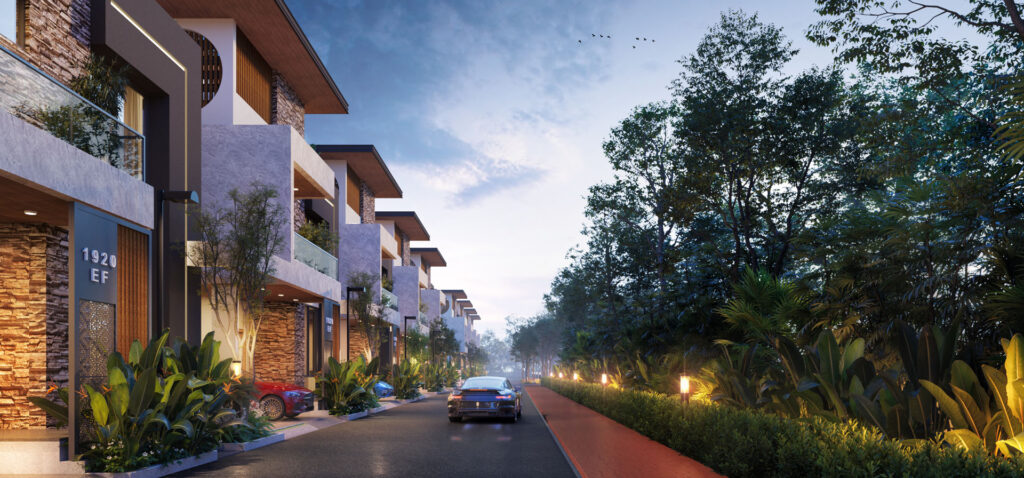
Conversely, owning a villa-style skyrise turns your ongoing operational costs into equity. Every rupee paid toward an EMI builds equity in a premium asset in East Bangalore’s fastest-growing IT residential sector, delivering peace of mind alongside long-term capital gains.
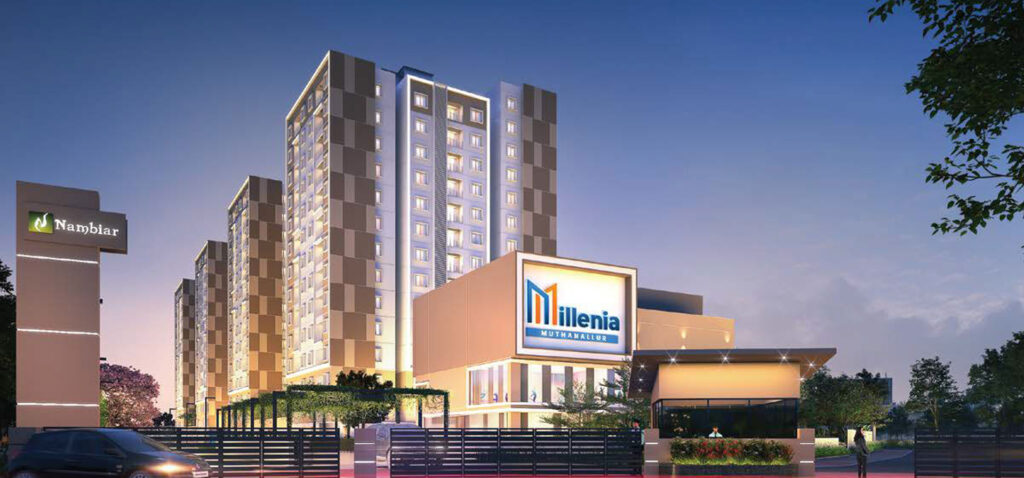
For a secure long-term investment, Nambiar District 25 stands out as a premier choice. This 100-acre RERA-registered township at Muthanallur Cross, just a kilometre off Sarjapur Main Road, offers premium 2, 3, and 4 BHK homes starting from 1,260 sq. ft. Backed by 16+ years of real estate excellence, the project features 150+ world-class amenities, including a 2.5 lakh sq. ft. Club Soho and an expansive sports district, providing unmatched connectivity to nearby tech hubs.
FAQs
1. Is Sarjapur Road a good investment?
As a long-term strategic asset, Sarjapur Road offers strong investment potential. Strong corporate employment hubs, seamless transit connectivity, and major infrastructure upgrades support real estate demand. That said, overall returns heavily depend on project execution and your initial purchase price.
2. Will Bangalore property prices fall in the future?
Future prices cannot be predicted with certainty. Factors include:
- Interest rates.
- IT hiring.
- New supply.
- Infrastructure delays.
3. Is it worth buying a 10-year-old apartment in Bangalore?
Yes, if checks pass:
- Construction quality and maintenance.
- Location and amenities.
- Documentation.
- Resale demand and remaining economic life (Assessing how many years the structure remains financially viable, which directly dictates your future resale value and bank loan eligibility).
- Purchase price.
4. What is the 2% rule for properties?
The 2% rule suggests monthly rent should equal 2% of the property’s acquisition cost (Rs. 2 Lakh for a Rs. 1 Crore flat). This benchmark is rarely observed in Bengaluru’s premium residential sector, where annual gross rental yields typically average 3% to 5%.
5. What is the 20-30-40 rule for buying a house?
This standard financial framework ensures sustainable homeownership through balanced debt management:
- 20% Down Payment: Minimum initial equity requirement.
- 30% EMI Cap: Maximum allocation of monthly income to home loans.
- 40% Total Debt: Maximum debt-to-income limit, including all liabilities.
6. What happens to flats after 20 years?
Property outcomes depend heavily on structural quality, society maintenance, and location. While physical structures endure, future valuation is driven by redevelopment potential, healthy sinking funds, and secondary market resale demand.