Quick Overview
- Snake plant, ZZ plant, and pothos top the lists of plants for apartment balconies and low-light interiors, since all three tolerate irregular watering and dim corners.
- Snake plants continue producing oxygen at night, making them a strong pick for bedrooms, per Soltech’s apartment plant guide.
- Spider plant and areca palm are considered pet-safe options for households with cats or dogs.
- Balcony size, sun exposure, and watering habits matter more than aesthetics when narrowing down choices.
What Are the Best Apartment Balcony Plants?
Snake plant, money plant, and areca palm are the most commonly recommended apartment balcony plants for different light levels, care needs, and space constraints.
1. What are the best apartment balcony plants for low light?
ZZ plant and snake plants handle low light and irregular watering better than most flowering options.
- ZZ Plant (Zamioculcas zamiifolia): A tough, sculptural plant with glossy, dark green leaves that store water in thick rhizomes. It tolerates neglect, low light, and irregular watering better than almost any houseplant, making it ideal for shaded balconies or corners.
- Light: Low to bright indirect light.
- Size: Compact, growing 2-3 feet tall.
- Pet Safety: Toxic (mildly irritating if chewed; keep away from pets).
- Snake Plant (Dracaena trifasciata): An upright, architectural plant with stiff, sword-like leaves striped in green and yellow. It thrives on neglect, handles low light and dry spells with ease, and purifies indoor air.
- Light: Low to bright indirect light.
- Size: Narrow footprint, growing 1-4 feet tall.
- Pet Safety: Mildly Toxic (can cause GI upset if ingested).
2. What are the best plants for bright apartment balconies?
Bougainvillaea, hibiscus, and marigold thrive with direct sun and reward you with regular colour.
- Bougainvillaea (Bougainvillaea spectabilis): A vigorous, vining shrub known for its vibrant, papery bracts in shades of pink, purple, orange, and red. It flourishes in full sun and blooms prolifically with minimal fuss once established.
- Light: Full sun (6+ hours direct).
- Size: Vining/sprawling, 3-6+ feet depending on training.
- Pet Safety: Pet-Safe (Non-toxic), though thorns can cause physical injury.
- Hibiscus (Hibiscus rosa-sinensis): A tropical flowering shrub with large, showy trumpet-shaped blooms in bright reds, pinks, yellows, and oranges. It loves heat and direct sun and flowers continuously through the warm months.
- Light: Full sun to bright indirect light.
- Size: Bushy, growing 3-6 feet tall (smaller in containers).
- Pet Safety: Pet-Safe (Non-toxic).
- Marigold (Tagetes spp.): A cheerful, compact flowering annual with ruffled orange, yellow, and red blooms. It’s easy to grow, self-seeds readily, and adds reliable, long-lasting colour to sunny balconies.
- Light: Full sun.
- Size: Compact, growing 1-3 feet tall.
- Pet Safety: Mildly Toxic (can cause skin or stomach irritation if ingested/handled).
3. What are the best home balcony plants for beginners?
Snake plant, pothos, Tradescantia Pallida (Purple Heart) and spider plant forgive missed waterings and inconsistent light, making them ideal first plants.
- Pothos (Epipremnum aureum): A trailing vine with heart-shaped, waxy leaves often variegated in green, yellow, or white. It’s nearly indestructible, adapts to almost any light condition, and tells you exactly when it’s thirsty by drooping slightly.
- Light: Low to bright indirect light.
- Size: Trailing, vines reaching 3-8 feet.
- Pet Safety: Toxic (can cause oral irritation if chewed).
- Tradescantia Pallida (Purple Heart): A trailing succulent-like plant with striking deep purple foliage and small pink flowers. It’s remarkably forgiving of missed waterings and inconsistent light, and roots easily from cuttings if it gets leggy.
- Light: Bright indirect light to full sun (best colour in more sun).
- Size: Trailing/spreading, 6-12 inches tall.
- Pet Safety: Mildly Toxic (can cause skin irritation on contact).
- Spider Plant (Chlorophytum comosum): An easygoing plant with arching, ribbon-like green-and-white striped leaves and dangling baby plantlets. It tolerates a wide range of light and watering habits, making it very hard to kill.
- Light: Bright indirect light (tolerates low light).
- Size: Compact, 1-2 feet tall with trailing offshoots.
- Pet Safety: Mildly Toxic (can have a mild hallucinogenic effect on cats; not seriously dangerous).
4. What are the best apartment balcony plants for small spaces?
Here are the highly distinct, beginner-friendly options perfectly adapted to the wind, space constraints, and sunlight on an apartment balcony:
1. Compact & Continuous Blooms
These plants provide rich colour without taking up horizontal floor space, thriving on railings or small corner tables.
- Zonal Geraniums: These are absolute powerhouses for sunny balcony railings. They have thick, semi-succulent stems that store water, meaning they tolerate missed waterings, and they bloom continuously in tight, space-saving clusters.
- Light: Full sun to partial afternoon shade.
- Size: Mounds beautifully up to 1- 1.5 feet.
- Pet Safety: Toxic to dogs and cats.
- Vinca (Sadabahar): A bulletproof choice for hot balconies. It produces glossy leaves and constant pink, white, or purple blooms. It prefers small pots, is highly heat-resistant, and springs back quickly if the soil dries out completely.
- Light: Loves hot, direct sun.
- Size: Compact bushes under 1 foot tall.
- Pet Safety: Toxic if ingested by pets.
2. Tough, Textural Plants for Small Balconies
- Ponytail Palm (Beaucarnea recurvata): Not a true palm, but a member of the agave family. It features a bulbous, water-storing trunk and a wild fountain of thin leaves. It takes up very little floor space, loves windy balcony conditions, and only needs water every 2 to 3 weeks.
- Light: Bright indirect light to full sun.
- Size: Narrow footprint, slowly growing 2-4 feet tall.
- Pet Safety: Pet-Safe (Non-toxic).
- Dwarf Curry Leaf Plant: A highly fragrant, woody perennial that handles balcony wind with ease. It thrives in small-to-medium pots, stays much more compact than standard curry trees, and gives you a constant supply of fresh kitchen herbs.
- Light: Bright morning or full afternoon sun.
- Size: Easily kept pruned to 1.5-2 feet.
- Pet Safety: Pet-Safe (The leaves are safe, though the dark berries should not be fed to animals).
5. What are the best apartment balcony plants for clean air?
Snake plant, areca palm, and money plant are widely cited for improving indoor air quality. are widely cited for their ability to improve indoor air quality. While they work best indoors, placing them near open balcony doors creates a natural fresh-air barrier that filters the incoming urban breeze.
How Do You Choose Plants for an Apartment Balcony?
1. How do sun, shade, and wind exposure affect apartment balcony plants?
East-facing balconies suit morning-sun lovers like hibiscus, while shaded balconies do better with ferns or pothos; strong wind exposure calls for sturdier, lower plants.
2. How do balcony size and weight limits affect plant choices?
Compact railing planters and lightweight pots work best on smaller balconies, especially in high-rise apartments with railing load restrictions.
3. How much watering time and care effort do apartment balcony plants need?
- Ponytail Palm: Extremely low-maintenance; water only every 2-3 weeks, letting the soil dry out fully between waterings since the bulbous trunk stores water like a succulent.
- ZZ Plant: Very low effort; water every 2-3 weeks, allowing the soil to dry out completely; it tolerates being ignored far more than being overwatered.
- Snake Plant: Low effort; water every 10-14 days, less in cooler months, as it’s highly drought-tolerant and prone to root rot if overwatered.
- Bougainvillaea: Moderate to high effort; water every 2-3 days in peak summer to support its heavy sun exposure and blooming, but let the soil dry slightly between waterings.
- Hibiscus: High effort; needs near-daily watering in peak summer due to its large leaves and continuous blooming, plus occasional feeding of fertiliser to sustain flowers.
- Marigold: Moderate effort, water every 2-3 days, keeping soil consistently moist but not soggy, with regular deadheading to encourage more blooms.
- Pothos: Low effort, water every 7-10 days once the top inch of soil feels dry; very forgiving of inconsistent schedules.
- Tradescantia Pallida (Purple Heart): Low to moderate effort, water every 5-7 days, letting soil dry slightly between waterings; more frequent watering deepens leaf colour.
- Spider Plant: Low effort, water every 7-10 days, allowing soil to dry between waterings; adaptable to occasional missed schedules.
- Areca Palm: Moderate effort, water every 4-6 days to keep soil lightly moist, plus occasional misting to maintain humidity for its feathery fronds.
- Money Plant: Low to moderate effort, water every 5-7 days once topsoil dries out; thrives with minimal fuss whether trailing or climbing.
4. Which apartment balcony plants are safe for pets and children?
Spider plant, areca palm, and Dwarf Curry leaf are commonly listed as non-toxic, while money plant and pothos are mildly toxic if chewed and best kept out of reach.
Which Indoor Plants for Apartments Work Best by Condition?
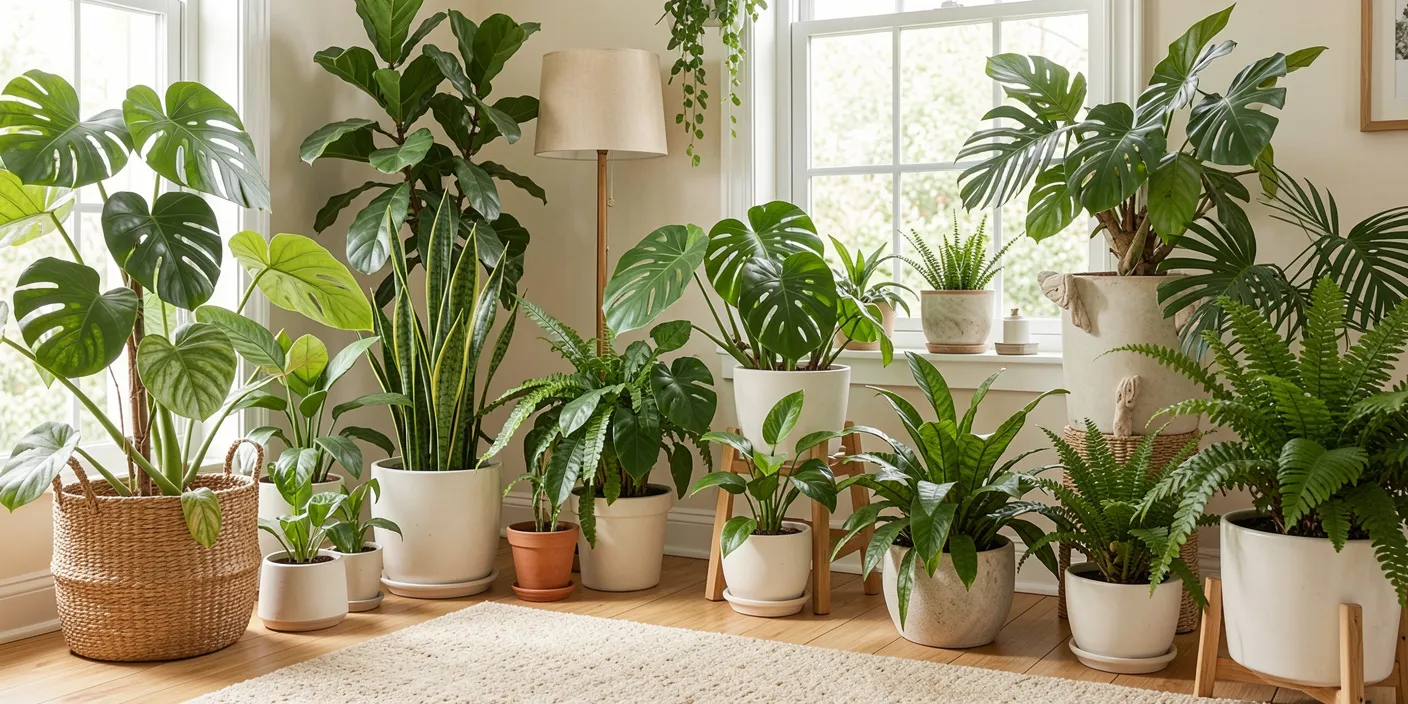
Every apartment has different light, space, and time constraints; the right plant depends on matching its needs to your conditions. Here’s a quick-reference guide to six reliable indoor plants for home, organised by growing needs, care level, ideal placement, and the visual presence each brings to a room.
| Plant | Growing Conditions | Maintenance Level | Best Placement | Watering Schedule | Maintenance Tip | Presence When Placed |
|---|---|---|---|---|---|---|
| Snake Plant | Low to bright indirect light | Low | Corners, bedrooms | Every 10-14 days | Let soil dry fully; avoid overwatering | Tall, upright lines add structure and height |
| ZZ Plant | Low to bright indirect light | Very Low | Dim corners, hallways | Every 2-3 weeks | Wipe leaves occasionally to keep them glossy | Sculptural, dark-green foliage adds quiet elegance |
| Pothos | Low to bright indirect light | Low | Shelves, hanging spots | Every 7-10 days | Trim trailing vines to encourage fuller growth | Cascading vines soften edges and fill space |
| Spider Plant | Bright indirect light (tolerates low) | Low | Hanging baskets, small nooks | Every 7-10 days | Remove plantlets to redirect energy to the main plant | Airy, arching leaves create movement in tight spaces |
| Peace Lily | Moderate to low light | Moderate | Bathrooms, low-light rooms | Every 5-7 days | Mist leaves for humidity; drooping signals thirst | White blooms bring softness to shaded corners |
| Rubber Plant | Bright indirect light | Moderate | Bright corners, living rooms | Every 7-9 days | Dust large leaves to maintain shine | Bold, glossy leaves make a single striking statement |
How Do You Set Up a Balcony Plant Space?
A good setup for plants for an apartment balcony starts with the right pots, soil, and watering rhythm, not the plants themselves.
- Pots & Drainage: Choose pots with drainage holes and a saucer; standing water is the top cause of root rot on balconies.
- Soil Mix: Combine garden soil, cocopeat, and compost to ensure adequate drainage and nutrition for most balcony plants.
- Watering Routine: Water early in the morning or in the evening, and use a saucer or drip tray to catch runoff on tiled floors.
- Grow Lights: Add grow lights when the space gets little to no direct sunlight, especially for flowering or fruiting plants.
What Are the Most Common Plant Care Mistakes?
Most plants die from a few simple, repeated care mistakes.
- Overwatering: The leading cause of plant death; check soil moisture with a finger before watering to avoid root rot.
- Wrong Light Placement: Putting sun-loving plants in shaded corners stunts growth and weakens flowering.
- Skipping Drainage: Pots without drainage holes trap water at the roots, accelerating rot.
- Ignoring Seasonal Changes: Watering at the same rate year-round overlooks reduced needs in cooler months and higher needs in peak summer.
When Are Apartment Plants Not the Right Fit?
1. Which indoor plants work in very dark apartments?
Only a handful, like the ZZ plant and cast iron plant, tolerate near-zero natural light without a grow light.
2. Which apartment plants are best for frequent travel schedules?
Succulents, ZZ plant, and snake plant can go two to three weeks without attention.
3. How do strict balcony rules affect apartment plant choices?
Some buildings restrict railing weight or the use of visible planters, so check society or building guidelines before setting up a balcony garden.
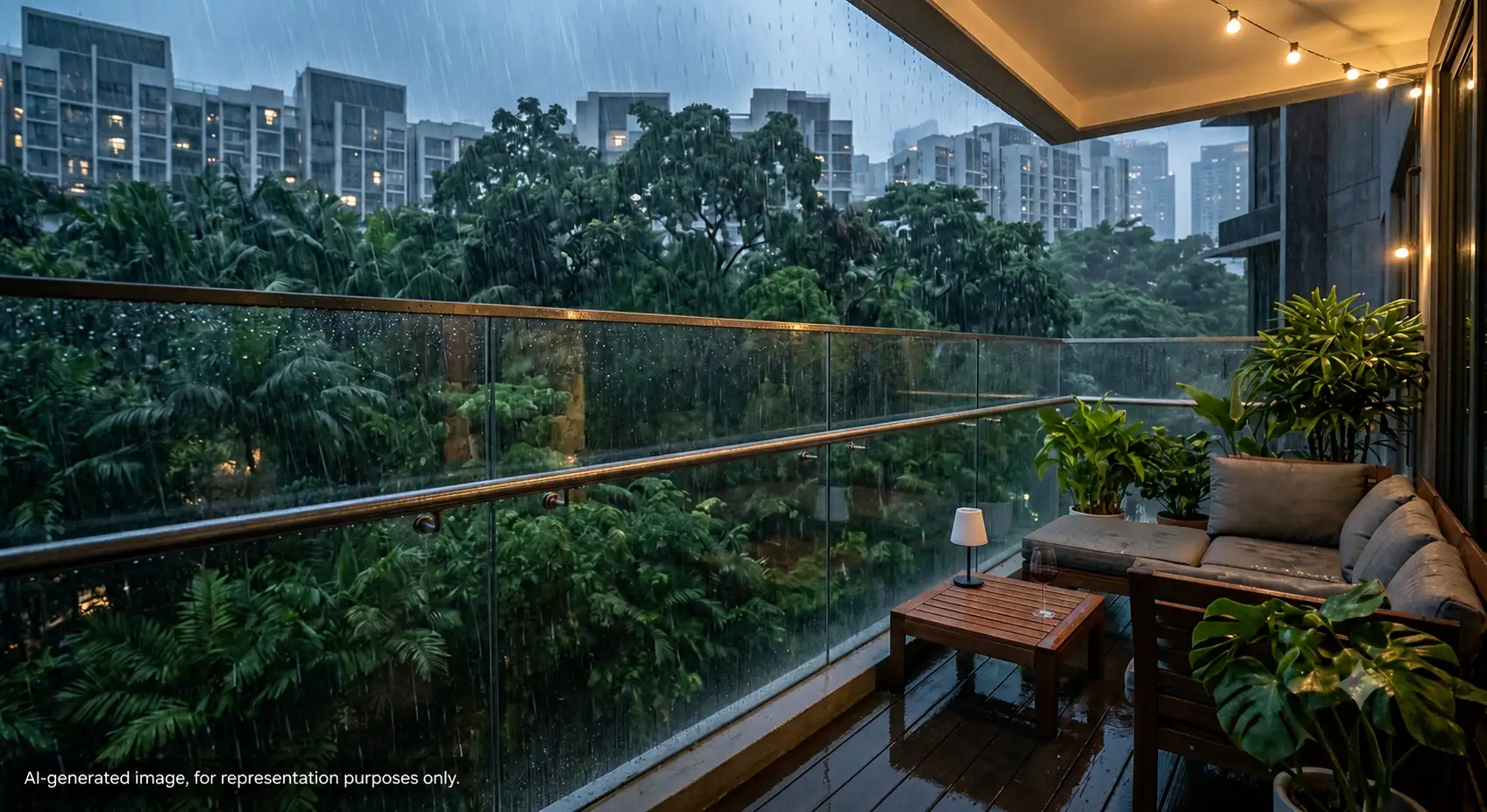
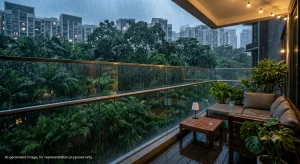
Apartments with deep, well-ventilated balconies make this kind of greenery far easier to maintain. In projects like Nambiar District 25, a RERA-registered township, wide private balconies give residents enough room for a proper mix of plants, from trailing pothos to flowering pots, without crowding the space used daily.
Conclusion
Choosing plants for an apartment balcony comes down to matching the light, space, and attention you can realistically give. Start with a few forgiving options like snake plant or pothos, then expand once you know which specific balcony conditions your plants can support. During the rainy season, following tips for a moisture free home in monsoon can also help you maintain a fresh and comfortable balcony and living space.
FAQs
1. Which indoor plant is best for a living room?
Rubber plant or peace lily works well as a single-statement plant in a bright living room corner.
2. What plants clean the air in apartments?
Snake plant, areca palm, and money plant are the most commonly cited options for improving indoor air quality.
3. What are the top 10 indoor plants?
Snake plant, ZZ plant, pothos, spider plant, peace lily, rubber plant, areca palm, calathea, money plant, and philodendron are consistently ranked among the best home plants.
4. What is the best plant for a balcony?
Snake plant, ZZ plant, ponytail palm, and bougainvillaea are reliable all-round choices; they handle varied light, need minimal watering, and suit most balcony conditions with little upkeep.
5. Which flower is good for an apartment?
Hibiscus and marigold are colourful flowering choices for sunny apartment balconies, though hibiscus needs more attentive watering and feeding than marigold to keep blooming well.