Quick Overview
Both a township and a regular apartment complex showcase modern amenities and community living in their brochures, but daily life in each is quite different. Knowing the definition of township real estate and how it compares with a regular complex helps you choose a home that suits your budget, family, and future plans.
- A township is a large, planned community with homes, open spaces, and daily facilities in one place.
- A regular apartment complex is smaller, with homes and shared amenities but few services inside.
- While townships require a higher initial investment and maintenance to support extensive infrastructure, they offer greater everyday convenience, open space, and long-term value.
- Regular complexes suit short-term or basic housing needs, while townships are ideal for families planning a settled, self-contained lifestyle over the long run.
Township Real Estate Definition
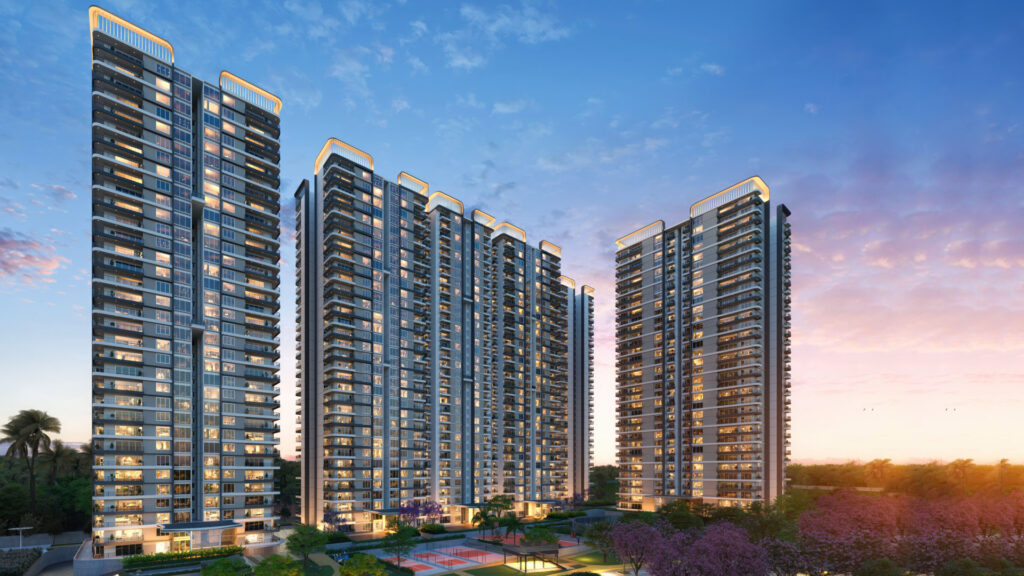
A township is a large, planned residential community that combines homes with the facilities needed for daily life.
1. What Makes a Project a Township
A township is built on a large land area under a single master plan. It features wide open spaces and shared facilities like clubhouses, sports zones, and shops or healthcare. In Bengaluru, a true township usually spans 25 acres or more.
2. What Makes Integrated Township Living Different From a Regular Apartment Complex?
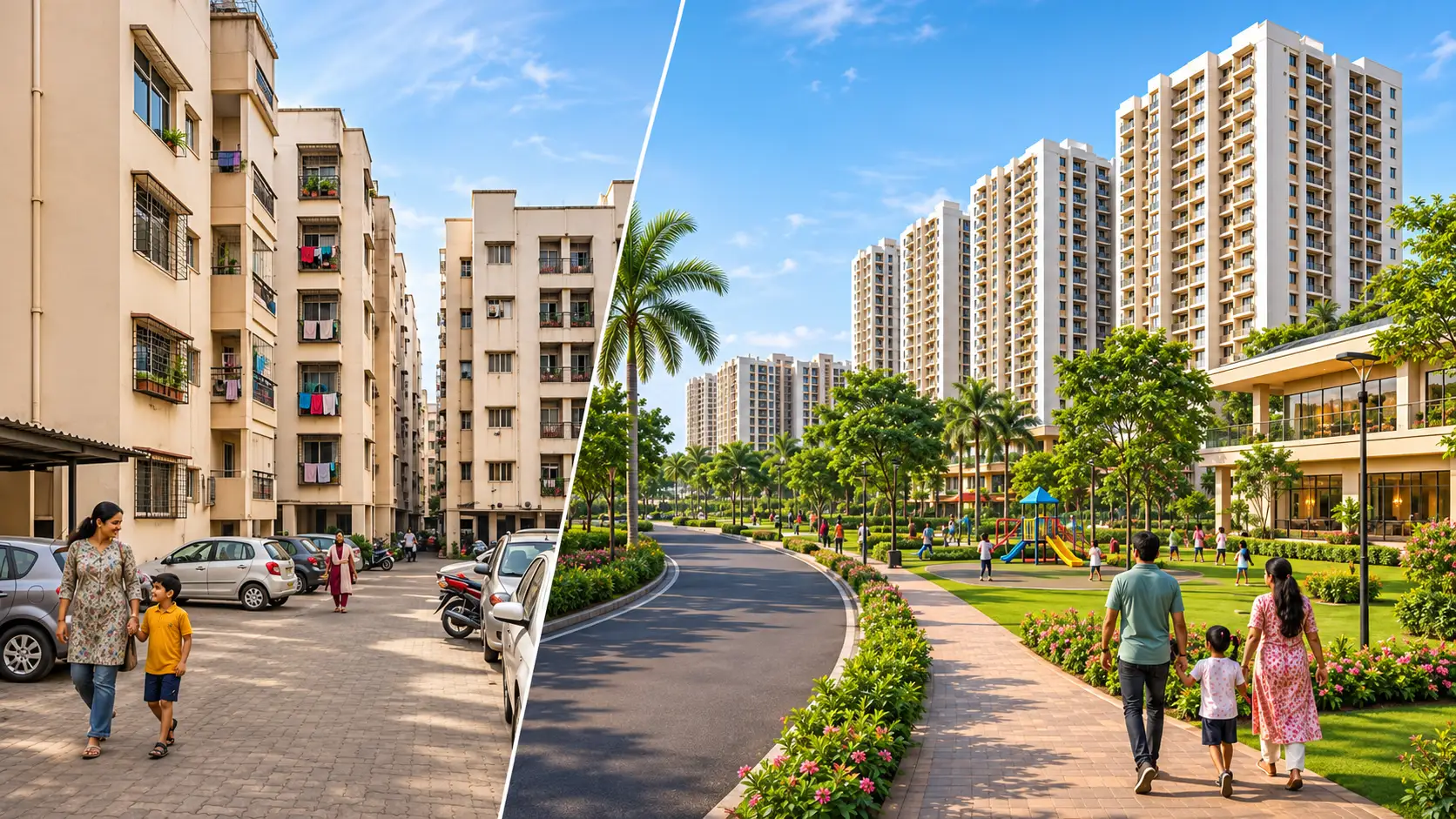
An integrated township brings homes, recreation, and daily conveniences together in one place. Residents can walk to landscaped parks, large sports arenas, retail stores, and wellness spaces without leaving the community. A regular complex offers comfortable homes and basic amenities, while most daily errands still require a trip outside.
3. How a Regular Apartment Complex Differs
Regular apartment living usually means one or a few towers on a smaller plot, with a basic clubhouse, pool, and gym. Daily essentials like shops, cafes, workspaces, and healthcare remain outside the gate.
4. When the Label Gets Used Loosely
In real estate, the term “township” is sometimes used broadly for mid-sized gated communities. Developments under 25 to 30 acres naturally function more like large apartment complexes. Reviewing the master plan gives you a clear picture of how much open space and daily infrastructure are actually included.
5. Side-by-Side: Township vs Apartment Living
| Factor | Township | Regular apartment complex |
|---|---|---|
| Size | Large, often 25+ acres | Smaller plot, one or more towers |
| Open space | More generous | Limited |
| Amenities | Wide range, multiple zones | Basic set |
| Daily services | Often inside | Mostly outside |
| Maintenance | Usually higher (but reflects wider amenities) | Usually lower |
| Community | Large and varied | Smaller and close-knit |
6. Scale, Density and Layout
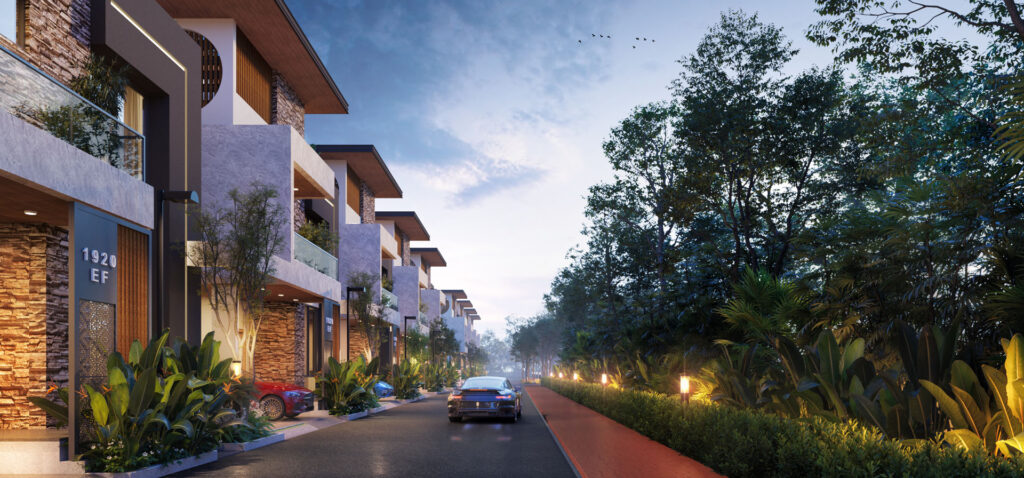
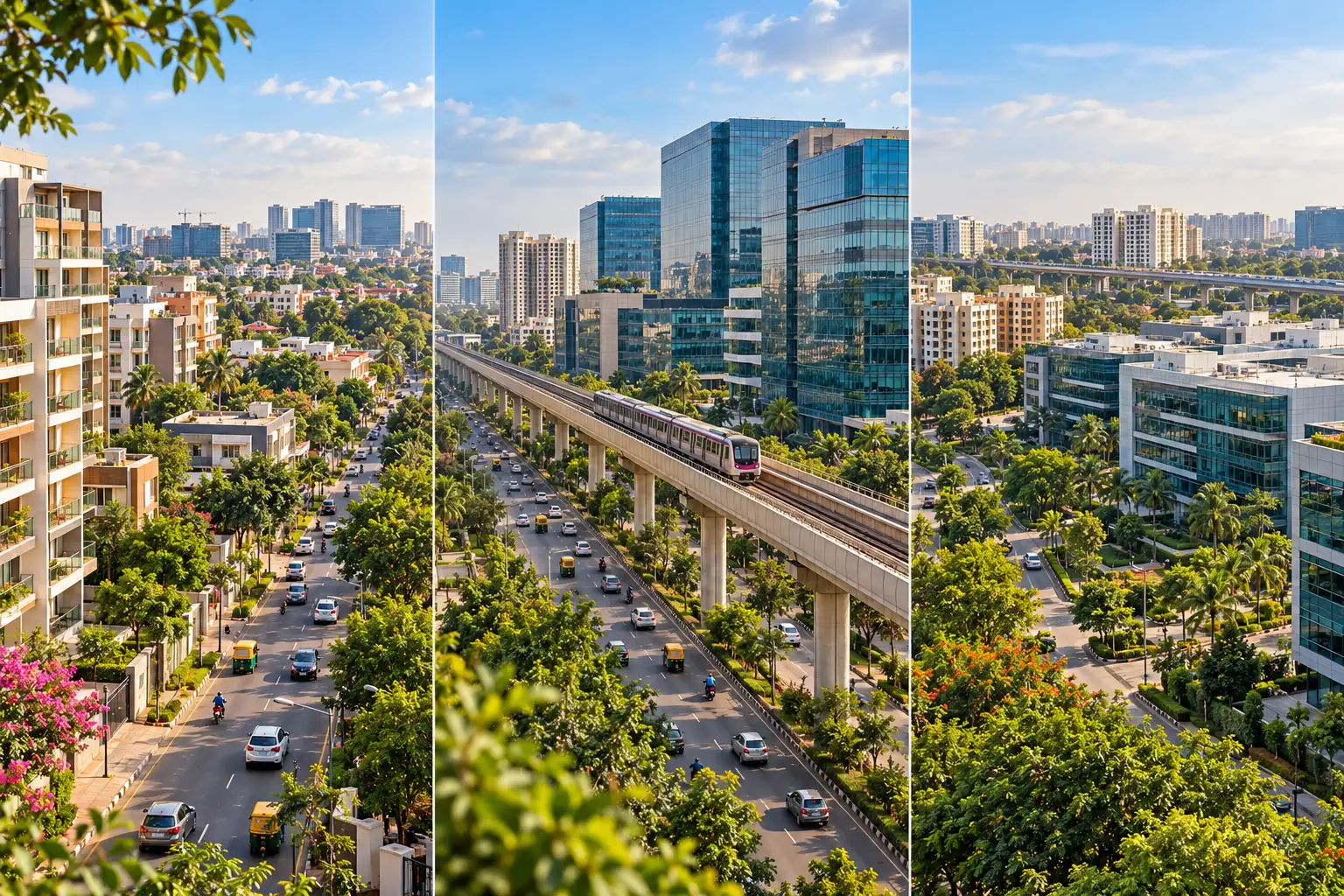
Townships spread homes across a larger master-planned area, giving you wider roads and more breathing room. Regular complexes fit homes onto a more compact plot, leaving less open ground.
7. Amenities and Shared Spaces
Townships usually offer expansive clubhouses, multiple sports zones, and dedicated walking trails. Regular complexes provide a smaller, single set of shared amenities.
8. Daily Convenience and On-Site Services
Townships often include high-street retail, cafes, clinics, and workspaces within the gates. In a regular complex, you step out into the surrounding neighbourhood for these everyday needs.
9. Privacy, Crowds and Community Feel
Townships bring together a larger, diverse community with vibrant social spaces spread across different zones. Regular complexes have fewer residents, offering a smaller, close-knit environment.
The Cost Trade-Offs Buyers Miss
1. Upfront Price Versus Long-Term Value
Townships in Bengaluru typically cost 15-25% more per sq. ft. than nearby standalone projects. That extra pays for open space, amenities and planned infrastructure.
2. Maintenance, Sinking Funds and Recurring Fees
Township maintenance in Bengaluru typically costs Rs. 3-5 per sq. ft. per month, compared with Rs. 1.5-2.5 in standalone projects.
18% GST applies to monthly maintenance only when both your monthly bill crosses Rs. 7,500 per home and the association’s annual turnover exceeds Rs. 20 lakh. Once crossed, GST applies to the entire bill, not just the extra amount, meaning a Rs. 9,000 charge is taxed on the full Rs. 9,000. Also check the sinking fund balance, which is the reserve set aside for major future repairs.
3. Commute and Lifestyle Costs Outside the Property
Because townships need large land parcels, they are often located in developing city corridors. While built-in shops and amenities cut down your local errand trips, it is still smart to factor your daily office commute and fuel costs into your overall budget.
Which Option Fits Your Stage of Life
1. Young Professionals Seeking Convenience
A compact apartment complex suits young professionals who want a straightforward, lock-and-leave home with minimal upkeep. At the same time, well-connected townships near major IT corridors are increasingly popular with working professionals and first-time homebuyers. Co-working lounges, full-scale fitness clubs, and cafes right on campus make both workdays and weekends effortless.
2. Families Prioritising Schools and Open Space
While a regular apartment complex can provide a basic play area and proximity to city schools, growing families often need more room to thrive. Integrated townships located along established educational and IT corridors give parents easy access to reputed schools while offering wide, vehicle-free parks and dedicated sports zones inside the gates. This balance lets children enjoy safe outdoor play every day without long drives across the city.
3. Why Do Families Prefer Integrated Communities?
Families value safety, space, and a smooth daily routine. Children can play and cycle freely within a secure, traffic-controlled campus. Parents save valuable time with reputed schools nearby and everyday shops and sports facilities right inside the gates, while a vibrant neighbourhood gives kids a lively peer group to grow up with.
4. Investors Focused on Rental Demand and Resale
Both options offer distinct advantages depending on your investment goals. Regular apartment complexes often see brisk, short-term tenant turnover, whereas well-connected townships attract settled families and corporate professionals looking for longer leases, leading to steadier rental income and lower vacancy. On the resale front, timelines typically range from 60 to 90 days in established, high-demand corridors to 6 to 12 months for larger, premium homes, where the added wait often translates into stronger capital appreciation.
5. How Township Senior Living Changes the Comparison
Senior residents benefit from walking paths, security, nearby healthcare and an active community. Demand is growing, with India’s senior living market expected to cross Rs. 1 lakh crore by 2030.
Senior-friendly spaces within a township make it easy for parents to live close to family while enjoying a safe, self-sufficient daily routine.
What Should Buyers Evaluate Before Choosing a Township?
1. Location and Commute Reality
Drive to your workplace at peak hours before you decide.
2. Amenity Usage Versus Amenity Marketing
List the facilities you will actually use, rather than counting what is advertised.
3. Build Quality, Management and Maintenance
Visit completed phases. Speak to residents about maintenance and service.
4. Flexibility for the Next 5 to 10 Years
Consider children’s schooling, your parents’ everyday comfort, or a career shift.
5. Exit Options If Your Needs Change
Check resale and rental activity in the community. Confirm RERA registration for your specific phase, since townships are often registered phase by phase.
Common Myths and Realities About Township Living
1. Bigger Always Means Better
- The Myth. Simply picking a project with the largest land parcel guarantees a better lifestyle.
- The Reality. Size only works in your favour when backed by smart master planning, reliable upkeep, and strong road connectivity. When open spaces and daily conveniences are thoughtfully laid out, scale becomes your biggest advantage.
2. More Amenities Always Justify Higher Fees
- The Myth. Adding a long list of features on paper automatically makes higher monthly charges worthwhile.
- The Reality. Numbers alone only add value when those spaces are well-designed and properly maintained. When a township offers a wide variety of sports, wellness, and leisure zones, different family members naturally use them throughout the week. That everyday usage turns monthly maintenance into a genuine lifestyle upgrade.
3. Apartment Complexes Cannot Offer Community
- The Myth. Only large townships can build a warm, connected neighbourhood.
- The Reality. Well-run apartment complexes often have close-knit resident groups on a smaller scale. Townships simply expand that social experience, offering dedicated clubhouses, walking trails, and wider spaces where every generation can connect while keeping their privacy.
Conclusion
There is no single right choice when picking between a regular apartment complex and an integrated township. A compact complex works well when you want a straightforward home with minimal maintenance. However, as work routines and family needs evolve, many homebuyers look for more breathing room, everyday convenience, and a community built for the long haul. Using the township real estate definition as your starting point, weigh your daily commute, maintenance budget, and lifestyle goals for the next decade.
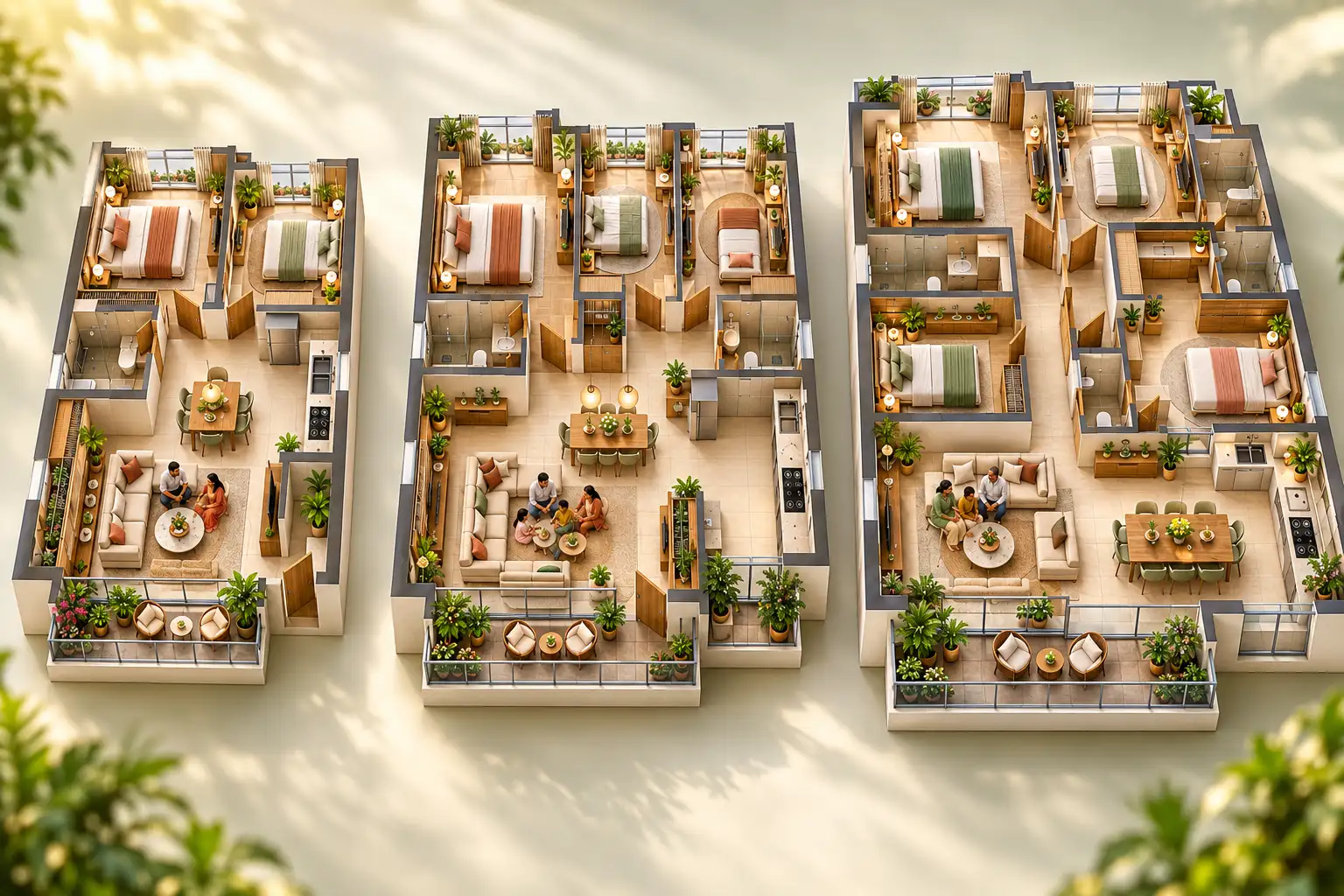
If an integrated township aligns with your plans, experiencing one in person is the best way to see how scale and planning come together. Nambiar District 25, a 100-acre RERA-registered township at Muthanallur Cross off Sarjapur Road, offers a clear look at modern township living. Connected to major IT hubs and reputed schools, it offers spacious 2, 3, and 4 BHK homes starting at 1,243 sq. ft., along with 150+ amenities for every generation. Backed by Nambiar Builders’ 16+ years of real estate experience, Nambiar District 25 offers a practical benchmark for comparing township life firsthand – a walk-through is the best way to see it.
FAQs
1. What is the difference between a township and a society?
A township is a large, master-planned community that brings homes, open spaces, and daily facilities together in one campus. A society usually refers to the residents’ welfare association (RWA) that manages a building or complex, or to the housing complex itself.
2. What is the difference between an apartment complex and an apartment building?
An apartment building is a single, standalone structure that houses multiple families. An apartment complex is a group of two or more buildings within a single gated campus that share common amenities, parking, and security.
3. Is a township the same as a city?
No. A township is a self-contained, planned community within or along a city’s growth corridors. While it offers everyday conveniences inside the gates, it still relies on the wider city for major employment hubs, highways, and public civic infrastructure.
4. Are townships worth buying into?
They can be a strong choice if you plan to stay long-term and want expansive open spaces, security, and everyday amenities close to home. Before deciding, evaluate the location, monthly upkeep, RERA registration, and the developer’s track record.
5. Do townships have higher maintenance charges?
Because townships maintain expansive landscaped grounds, large clubhouses, and round-the-clock infrastructure, their monthly upkeep is higher than that of a basic building, though costs are shared across a larger resident base. In Bengaluru, township maintenance typically runs Rs. 3 to Rs. 5 per sq. ft. per month, compared with Rs. 1.5 to Rs. 2.5 per sq. ft. in smaller standalone projects.