The right flat fits your family size, budget, lifestyle, and long-term goals. Understanding 2 BHK vs 3 BHK trade-offs, and where a 4 BHK makes sense, prevents overpaying for unused space.
Quick Overview
- 2 BHK: Best for couples, small families, and first-time buyers looking for an affordable entry point.
- 3 BHK: Best for families of four or professionals needing a dedicated home office or guest room.
- 4 BHK: Best for large or joint families, frequent hosts, and buyers seeking premium, independent living suites.
- Choose the optimal configuration for your current needs, then carefully evaluate the carpet area and layout efficiency.
What Do 2 BHK, 3 BHK and 4 BHK Mean?
BHK stands for Bedroom, Hall, and Kitchen. The number upfront simply tells you how many dedicated bedrooms the apartment has.
1. What Does Each Configuration Look Like?
A 2 BHK features two bedrooms, a living hall, and a kitchen. A 3 BHK introduces a third room, perfect for a growing family, a guest room, or a home office. A 4 BHK offers four expansive bedrooms, typically designed with attached bathrooms and premium privacy.
2. Does a Higher BHK Always Mean More Usable Space?
No. BHK counts rooms, not their actual size. A well-designed 3 BHK with an efficient layout can easily have more usable carpet area than a poorly planned, cramped 4 BHK. Always prioritise layout efficiency over room count alone.
2 BHK vs 3 BHK vs 4 BHK: Key Differences at a Glance
Each step up adds a bedroom, cost and upkeep. The difference between 2BHK and 3BHK is usually one flexible room.
Compare Bedroom Count, Space, Budget and Family Suitability
| Factor | 2 BHK | 3 BHK | 4 BHK |
|---|---|---|---|
| Typical Household | 2-3 members | 4-5 members | 5+ members or joint families |
| Standard RERA Carpet Area | 700 - 850 sq. ft. | 950 - 1,250 sq. ft. | 1,500 - 2,000+ sq. ft. |
| Standard Super Built-Up Area | 1,100 - 1,300 sq. ft. | 1,500 - 1,850 sq. ft. | 2,200 - 2,800+ sq. ft. |
| Room Flexibility | Functional; master bedroom + a child’s room or compact home office. | High flexibility; extra room can easily transition into a guest bedroom or a dedicated study. | Ultimate versatility; accommodates multiple master suites, private media lounges, or formal hosting spaces. |
| Relative Purchase Cost | Highly competitive entry tier | Mid-to-high premium tier | Ultra-luxury investment tier |
| Maintenance & Upkeep | Predictable & lowest | Moderate, based on shared amenities | Highest, due to premium square footage |
| Ideal Target Buyer | First-time buyers, young couples, and nuclear working professionals. | Growing families prioritising spatial independence or long-term utility. | High-net-worth individuals, large multi-generational families, or premium luxury seekers. |
*Note: Actual usable dimensions must always be cross-referenced against the official RERA carpet area filings for specific residential projects.
How Much Budget Do You Need for a 2 BHK, 3 BHK or 4 BHK?
Price rises with area. While Bengaluru’s macro-market averages look highly accessible on paper at roughly Rs. 9,450 per sq. ft., premium high-growth belts like Sarjapur Road command a localised premium. Driven by strong tech corridor demand, modern gated communities along this stretch trade at benchmark rates of Rs. 11,500 to Rs. 15,000+ per sq. ft., so a forward-looking homebuyer should plan for a higher initial budget. Using assumed saleable sizes, an illustration:
Estimated Budget Matrix: Sarjapur Road Corridor
| Configuration | Realistic Saleable Size Range | Average Micro-Market Base Rate | Indicative Property Price Range |
|---|---|---|---|
| 2 BHK | 1,100 - 1,300 sq. ft. | Rs. 12,000 per sq. ft. | Rs. 1.32 Crore - Rs. 1.56 Crore |
| 3 BHK | 1,500 - 1,850 sq. ft. | Rs. 12,500 per sq. ft. | Rs. 1.87 Crore - Rs. 2.31 Crore |
| 4 BHK | 2,200 - 2,800+ sq. ft. | Rs. 13,500 per sq. ft. | Rs. 2.97 Crore - Rs. 3.78+ Crore |
Add stamp duty, registration, interiors and maintenance to your budget.
When Does Upgrading to a Bigger Flat Make Financial Sense?
Upgrading to a larger home makes sense when your need for extra space aligns with a stable, growing income. A real change in your daily life, like needing quiet zones for children, accommodating extended family, or shifting to permanent remote work, easily justifies adding a room.
However, a larger layout should never stretch your budget to the limit. If a higher monthly payment hurts your savings or drains your emergency fund, a well-planned, efficient smaller flat is the safer choice. Remember to also account for the incremental shifts in carpet-area maintenance fees and furnishing capital.
Carpet Area vs Layout: What Matters More When Choosing a BHK?
Both matter, but answer different questions.
| Factor | What it tells you | What to check |
|---|---|---|
| Carpet area | The actual, usable floor space inside the apartment's inner walls. | Confirm the developer's quote is the official RERA carpet area, excluding balconies, terraces, and thick external pillars. |
| Layout | How efficiently and comfortably that interior space can actually be used daily. | Evaluate room shapes (square vs narrow), how easily traffic flows between rooms without blocking paths, and whether your standard furniture fits comfortably. |
Understand Carpet Area, Built-Up Area and Super Built-Up Area
- Carpet area: The usable area inside the walls, excluding external walls and balconies.
- Built-up area: Carpet area plus wall thickness and, for apartments, the balcony.
- Super built-up area: Built-up area plus a share of common areas such as corridors, lifts and the clubhouse.
Check Bedroom Sizes, Storage, Natural Light and Usable Space
Visit a sample unit and look for:
- Bedrooms that fit a bed and wardrobe.
- Built-in storage or space for it.
- Daylight and cross-ventilation.
- Short passages, since corridors waste carpet area.
Why a Well-Planned 3 BHK Can Be More Practical Than a Poorly Designed Larger Flat
A masterfully planned 3 BHK with zero wasted space, square room layouts, and abundant natural light often feels significantly larger and more cohesive than a cramped 4 BHK broken up by narrow corridors. Choosing a more efficient layout not only keeps you from paying a premium for unusable square footage, but also slashes long-term maintenance costs, property taxes, and interior furnishing expenses.
Is 2 BHK, 3 BHK or 4 BHK Better for Investment?
A 2 BHK or 3 BHK configuration typically captures the highest market liquidity, attracting the largest pool of corporate tenants and everyday homebuyers. An expansive 4 BHK, on the other hand, positions you within a refined, high-ticket premium segment. Ultimately, micro-market location and developer project quality will influence your final returns far more than the bedroom count alone.
Resale Demand and Buyer Preferences
3 BHK apartments are the premier sweet spot for resale, commanding strong demand from upgrading families seeking long-term spatial stability. A 2 BHK offers a highly liquid exit route, driven by budget-conscious, first-time homebuyers. Conversely, 4 BHK properties feature a smaller, exclusive buyer pool, which generally requires a longer marketing timeline to realise optimal value.
Rental Potential and Long-Term Affordability
Bengaluru’s real estate sector remains one of India’s strongest performers, driving a massive 12% annual surge in residential absorption. This relentless demand directly fuels the city’s robust rental ecosystem. Trailing micro-market indexes show standard 2 BHK flats commanding premium averages of Rs. 33,000 to Rs. 46,500 per month along the Sarjapur Road corridor, and Rs. 30,000 to Rs. 46,000 within Whitefield. While larger layouts bring in higher absolute monthly checks, their increased purchase costs mean you must carefully evaluate total upfront pricing against your expected annual yield.
Choose a Configuration Based on Your Investment Goals
- Steady Rental Yields: A well-located 2 BHK near dominant employment nodes offers the fastest tenant onboarding and efficient cash flow.
- Balanced Growth & Resale: A 3 BHK situated in a well-developed, family-oriented neighbourhood provides the strongest blend of capital appreciation and structural demand.
- Premium Asset Allocation: A 4 BHK caters to the ultra-luxury rental and buyer demographic, delivering premium asset prestige over an extended, long-term holding period.
How to Choose the Right BHK: A 5-Step Checklist
- Audit Immediate Occupancy Requirements: Enumerate only the core, non-negotiable private bedrooms your household requires today.
- Project Evolving Lifestyle Milestones: Account for upcoming career transitions, expanding family needs, or long-term hosting routines.
- Establish Capital and Recurring Outlays: Ensure monthly EMIs stay comfortable while factoring in recurring maintenance, taxes, and furnishing costs.
- Prioritise Spatial Efficiency Over Room Count: Evaluate options based on true RERA carpet area, layout geometry, natural lighting, and integrated storage.
- Optimise for Maximum Layout Utility: Select the most efficient configuration that satisfies your core needs without paying for redundant, unused space.
Common Mistakes to Avoid When Buying a Flat
- Judging by BHK count instead of carpet area.
- Stretching the budget for a larger flat.
- Ignoring layout, ventilation and storage.
- Skipping RERA and approvals checks.
- Forgetting maintenance and other running costs.
Conclusion: Which BHK Is Right for Your Family?
There is no single best choice. A 2 BHK suits couples and small families, a 3 BHK suits growing households, and a 4 BHK suits large families. Start with the bedrooms you need, test the layout, and set a sustainable budget. Compare 2 BHK vs 3 BHK on carpet area and monthly costs, not just price.
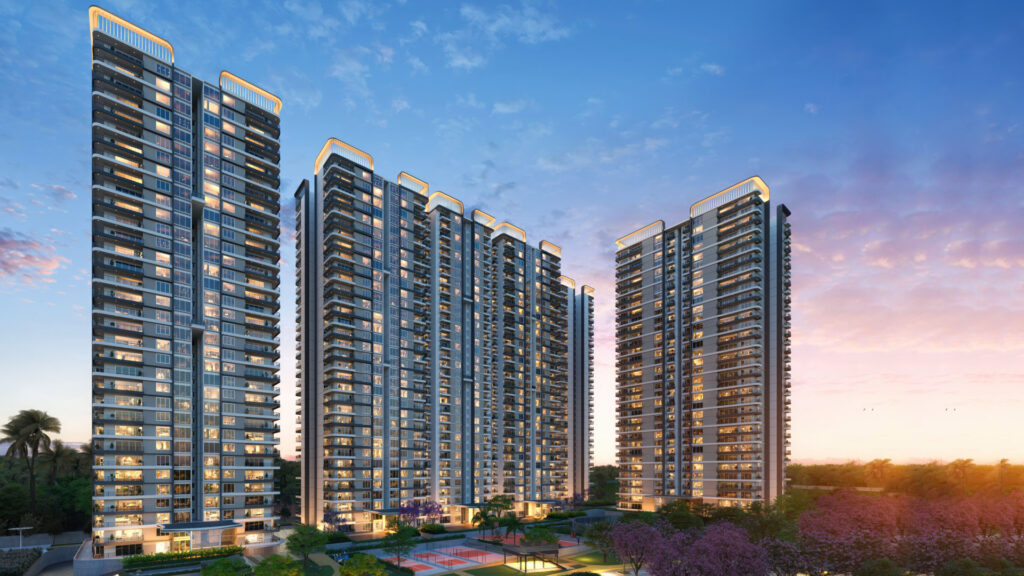
Modern premium developments are shifting toward this exact balance between layout geometry and actual footprint. For instance, in high-demand zones like East Bengaluru, ongoing projects like Nambiar District 25 are engineered around these layout efficiencies, using expansive structural design, maximising natural light, and creating dedicated privacy boundaries. When comparing configurations, judge a flat by its usable RERA carpet area and smart spatial planning, not just the raw room count, to ensure your investment remains functional and rewarding for years to come.
Frequently Asked Questions
1. Which Is Better, 2 BHK or 3 BHK?
Neither is better for everyone. The difference between 2 BHK and 3 BHK is one extra room and a higher budget. Choose a 2 BHK for a small family, a 3 BHK for a study or for children.
2. What Does 4 BHK Stand For?
A 4 BHK stands for four bedrooms, a hall, and a kitchen. It suits larger families.
3. How Many Square Feet Is a 3 BHK Flat?
There is no single fixed size, but premium market standards typically feature a RERA carpet area of 950 to 1,250 sq. ft. Because modern gated communities allocate space for sprawling common areas and luxury clubhouses, this translates to a super built-up area of 1,500 to 1,850 sq. ft. Always verify the exact carpet area in your sale agreement to understand your true usable living space.
5. Can You Build a 2 BHK in 700 Sq Ft?
Yes, 700 sq. ft. RERA carpet area sits perfectly within the modern market range for a highly functional 2 BHK layout. While its super built-up profile will comfortably sit between 1,100 and 1,300 sq. ft. on paper, maximizing its daily usability depends entirely on an efficient layout engineered with zero-wasted corridor space and square-room geometries.
6. Can a 2 BHK Flat Be Converted into a 3 BHK?
In most modern gated communities, a structural conversion is practically impossible. Because high-rise buildings utilize fixed shear walls or precast concrete blocks, internal walls are structural elements that cannot be demolished or altered. Furthermore, changing the apartment’s original sanctioned layout violates local municipal RERA approvals and society bylaws. If you genuinely require a third room, it is far more secure and cost-effective to buy an actual 3 BHK from the start rather than trying to alter a fixed 2 BHK framework.