People spend weeks comparing different properties on their phones and then try to buy a house in a weekend. That never ends well. If you are serious about buying in 2026, here is everything you actually need to know.
Key Takeaways Before You Buy a House in 2026
- 2026 has more inventory and steadier prices, genuinely better for buyers
- A credit score of at least 620 is needed, higher it is, the better the rates
- Down payment is not your only upfront expense; closing costs, stamp duty, and maintenance fees add to the total cost.
- Securing a home loan pre-approval before house hunting signals financial credibility and significantly strengthens your final offer.
- Your long-term financial readiness and personal liquidity consistently outweigh speculative market timing.
Step-by-Step Process to Buy a House in 2026
1. Decide Your Purpose for Buying a House
Are you buying to live in, rent out, or hold as an investment? Being clear on this shapes everything that follows. (Most home buying regrets trace back to not having a clear answer here.)
2. Check Credit Score and Overall Financial Health
Your credit score dictates your loan’s long-term affordability, not just your initial approval status. In India, leading institutional lenders use your CIBIL score to determine both eligibility and interest rates. A CIBIL score of 750 or above is ideal to unlock the most competitive interest rates and seamless processing. However, a score between 650 and 700 is also acceptable to major banks, provided you meet additional criteria. This may include onboarding a co-applicant with a stronger credit profile or submitting extra documentation to verify stable income streams.
3. Budgeting for Your Down Payment and Additional Costs
Aim to save at least 20% of the home’s price for the down payment so you can avoid paying Private Mortgage Insurance (PMI). In addition, plan for ongoing maintenance costs of around 2% to 4% of the home’s value each year, along with closing costs that typically range from 2% to 5% of the home’s value. Many homebuyers concentrate only on the down payment and underestimate these additional expenses.
4. Set a Realistic Home Buying Budget
Your monthly outgo involves more than just the EMI. A secure housing budget must account for recurring costs like property taxes, society maintenance fees, insurance and utilities. Keeping total debts under 40% of your net income protects your long-term liquidity.
5. Explore Home Loan and Mortgage Options
Compare at least three lenders before deciding. Get pre-approved early. This clarifies your borrowing capacity and signals to developers that you are a serious, qualified buyer.
6. Research Real Estate Market Trends in 2026
The Indian housing market shows stable, demand-driven growth. Research your specific micro-market to track local inventory levels, neighbourhood connectivity and upcoming infrastructure projects that influence future property value.
7. Hire a Real Estate Agent or Choose Self-Search
If you are buying directly from a developer in a new launch, their in-house sales team can guide you through inventory options and payment plans or you can get the help of a real estate agent in your search.
8. Inspect Properties and Verify Neighbourhoods In Person
While online portals help narrow down choices, always visit properties in person to check construction quality and the actual carpet area. Evaluate the surrounding neighbourhood, water reliability and your daily commute times before making a final decision.
9. Make an Offer and Negotiate the Price
Sellers and developers expect a counteroffer, so determine your maximum financial limit before starting. Ensure negotiations cover the entire cost, including car parking and club memberships, to avoid unexpected expenses later.
10. Conduct Property Inspection and Legal Verification
Hire a legal expert to review the title deeds and fetch an Encumbrance Certificate. Ensure the project is registered under RERA, which mandates that developers cannot accept more than 10% of the cost before signing a registered sale agreement
11. Finalise the Loan Disbursement Process
Submit your signed sale agreement to the bank for final underwriting. During this critical approval window, avoid taking new loans, making large credit purchases, or changing jobs, as sudden shifts in your financial profile can cancel your loan approval.
12. Complete Final Walkthrough and Close the Deal
Perform a final walkthrough to confirm that all fittings, plumbing and finishes match the original agreement. Thoroughly read all registration documents before signing the deed and then get the keys.
Suggested Read: Bangalore Real Estate Trends 2026
Understanding the Total Cost of Buying a House in 2026
The listing price is just one part of the total cost. Here is the complete cost breakdown:
| Cost | Typical Range |
| Down Payment | Banks in India finance 75–90% of the property value, so buyers need to arrange 10–25% as their own contribution. |
| Stamp Duty | Karnataka follows a slab-based structure: 2% for properties below ₹20 lakh, 3% for ₹20–₹45 lakh, and 5% for properties above ₹45 lakh. |
| Registration Charges | Registration charges in Karnataka were revised effective August 31, 2025, increasing from 1% to 2% of the property value across all property types. |
| Total Statutory Cost | Combined stamp duty, registration, and applicable cess bring the total statutory transaction cost to approximately 7.5–7.6% for properties above ₹45 lakh in Bangalore. |
| Home Loan Processing Fee | Banks typically charge 0.25–3% of the loan amount as a one-time processing fee, subject to minimum and maximum limits set by the lender. |
| GST on Under-Construction Property | GST is charged at 5% for residential units and 12% for commercial properties on under-construction purchases. |
| Annual Maintenance | Bangalore apartments typically charge ₹2–₹7 per sq. ft. per month depending on area and amenities, averaging around ₹4.5 per sq. ft. across the city. |
Understanding these numbers before committing to a property purchase ensures a comprehensive financial outlook and prevents unexpected liquidity constraints during the final stages of the transaction.
Buying an Apartment vs Independent House: Key Differences
Apartments:
Lower maintenance, better security, easier to rent out. Great for urban buyers wanting connectivity and convenience
Independent houses:
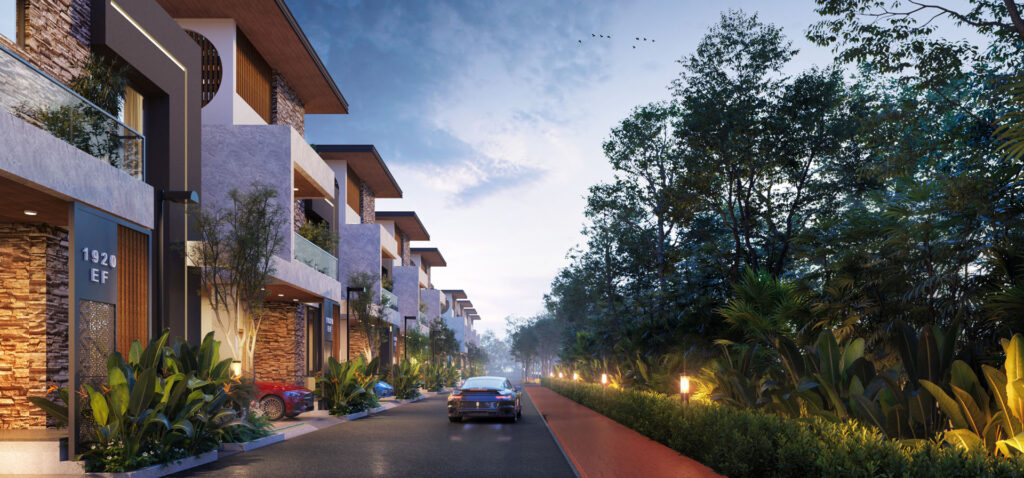
Provide more space, absolute privacy and land ownership, suiting families seeking long-term growth and complete control.
The Metro Context:
Prime micro-markets like Mumbai’s Thane West, Delhi-NCR’s Dwarka Expressway, Chennai’s OMR, and Bengaluru’s Sarjapur Road present distinct advantages, balancing high transit connectivity, rental yields and modern lifestyle conveniences.
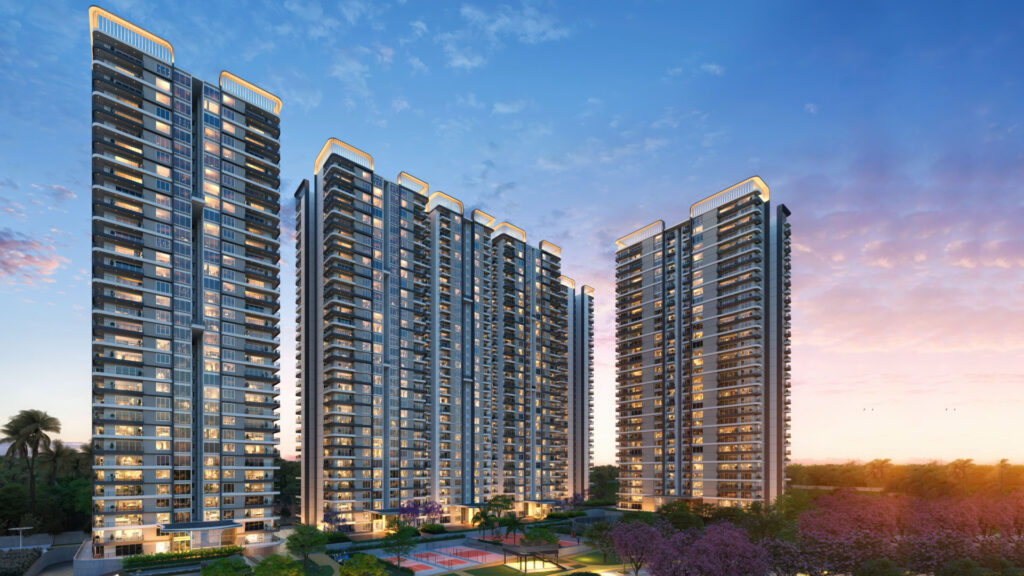
For buyers looking to buy apartment or buy homes in Bengaluru, Nambiar Builders is genuinely worth exploring. Nambiar District 25 has 2, 3, and 4 BHK homes from 1,243 sq. ft., and Nambiar Ellegenza Purple Crest has 4 and 5 BHK homes from 3,304 sq. ft., both off Sarjapur Road, RERA-registered, 16+ years of real estate development experience. (When you are spending this kind of money, a builder’s track record of actually completing projects is the baseline, not a bonus.)
Common Mistakes to Avoid When Buying Property
- Skipping title and encumbrance checks
- Starting the search without pre-approval
- Forgetting to budget for taxes, maintenance and closing costs
- Making big financial moves during loan approval
- Trusting a builder without checking RERA first
Final Thoughts on Buying a House in 2026 and Related Topics
2026 is a genuinely solid year to buy a house. More inventory, steadier prices, better room to negotiate. Sort finances early, do the legal checks, pick the right location and move with confidence.
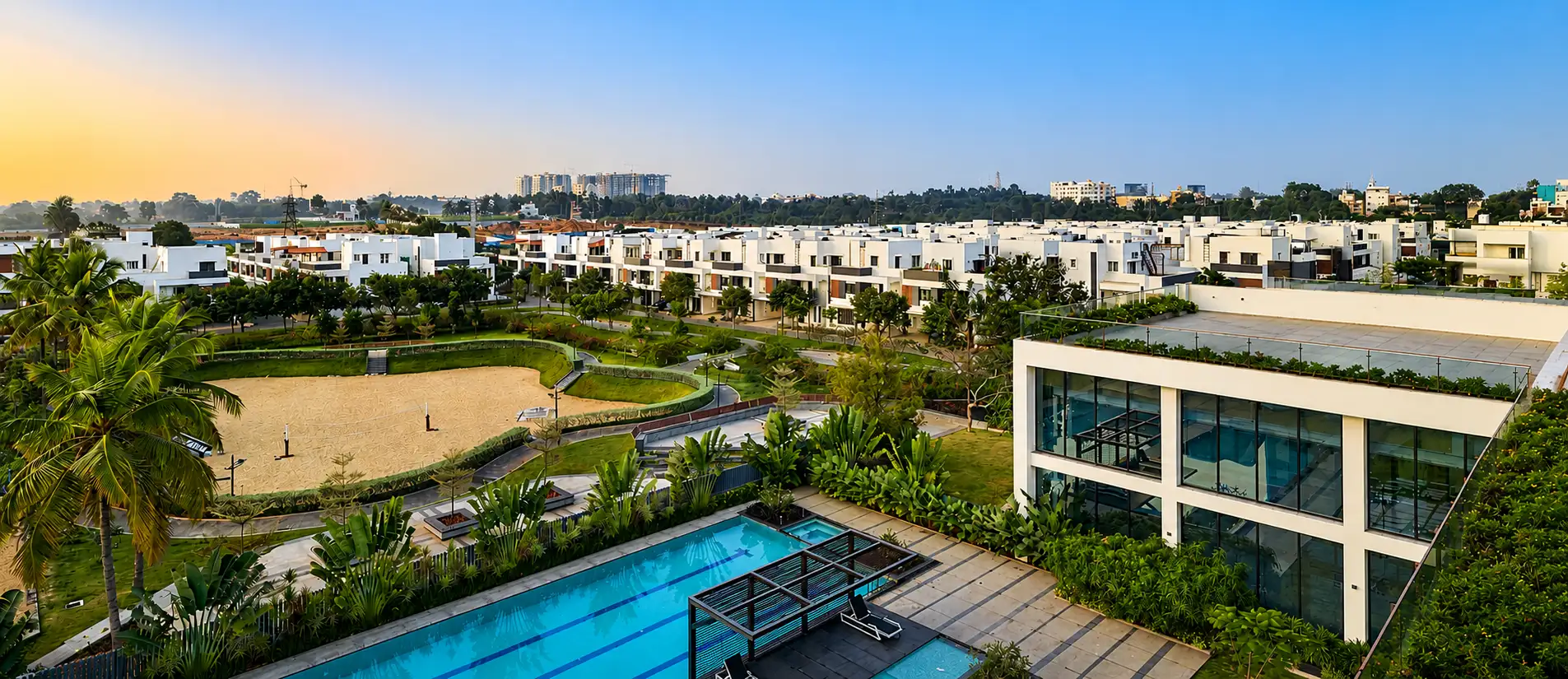
For anyone wanting to buy real estate in Bengaluru, Sarjapur Road is one of the city’s strongest corridors right now. Nambiar Builders covers multiple budgets there, from Nambiar Millenia to Nambiar District 25, all backed by 16+ years of real estate experience.
FAQs About Buying a House in 2026
What credit score is required to buy a house in 2026?
The required credit score is at least 620 for most loans. Aim for 750 or above for the best rates.
How much down payment is needed to buy a house?
A minimum down payment of 20% avoids PMI. In India, most lenders cover 75 to 90% of property value, so plan to keep 10 to 25% ready as your own contribution.
Is 2026 a good year to buy real estate?
Yes. If your personal finances are secure, the prevailing market conditions make it an opportune time to buy property in 2026.
Should I buy an apartment or an independent house?
Apartments suit urban buyers wanting low maintenance and connectivity and independent houses suit families who prefer space and land ownership. For Bengaluru, Nambiar Builders has strong options of both apartments and individual houses across Sarjapur Road.
What documents are required when buying property?
To buy a property, you require a sale deed, a title deed, an encumbrance certificate, an RERA certificate, a building plan, tax receipts, and ID proof. For home loans, add income proof, bank statements, and a PAN card.